Body and Shadow | Nurasol
The Nurasol Approach

The body remembers
what the mind tries to forget.

Shadow work is not only a mental process. It lives in the body, in the breath, in the places where emotion has been stored without expression. This is why Nurasol integrates yoga, breathwork, and somatic practice into every shadow path.

The philosophy

Why the body is where shadow work actually happens

Carl Jung understood that the shadow is not only psychological. It is somatic. The emotions we suppress, the parts of ourselves we deny, the wounds we carry without language, they do not disappear when we refuse to feel them. They settle into the body and stay there, shaping posture, breath, tension patterns, and the way we move through the world.

You can think your way toward self-understanding, and there is genuine value in that. But understanding alone rarely creates transformation. Transformation happens when the knowing reaches the body. When the insight becomes a felt sense. When the nervous system itself begins to reorganize around something new.

This is why every shadow path in Nurasol includes both reflective practice and somatic practice. The journal asks the question. The body holds the answer.

The shadow does not live in your thoughts. It lives in the places your body has learned to brace, to hold, to close. Shadow work that does not reach the body reaches only half of you.
01
The body holds what the mind protects
When an emotion is too overwhelming to be processed, the nervous system stores it in the body as tension, posture, or chronic activation. The shadow lives here, waiting to be acknowledged.
02
Awareness is not enough
Knowing you carry shame does not release the shame held in your chest. Knowing you carry grief does not open the throat that has been protecting itself for years. The body needs its own form of work.
03
Movement creates pathways for release
Specific yoga postures, breathwork practices, and somatic exercises create neurological and physiological openings that allow stored emotion to move. Not to be forced out, but to be safely released.
04
Integration happens in the body
The moment a shadow is truly integrated is felt, not just understood. It arrives as a shift in how you breathe, how you hold yourself, how you move. The body knows before the mind does.
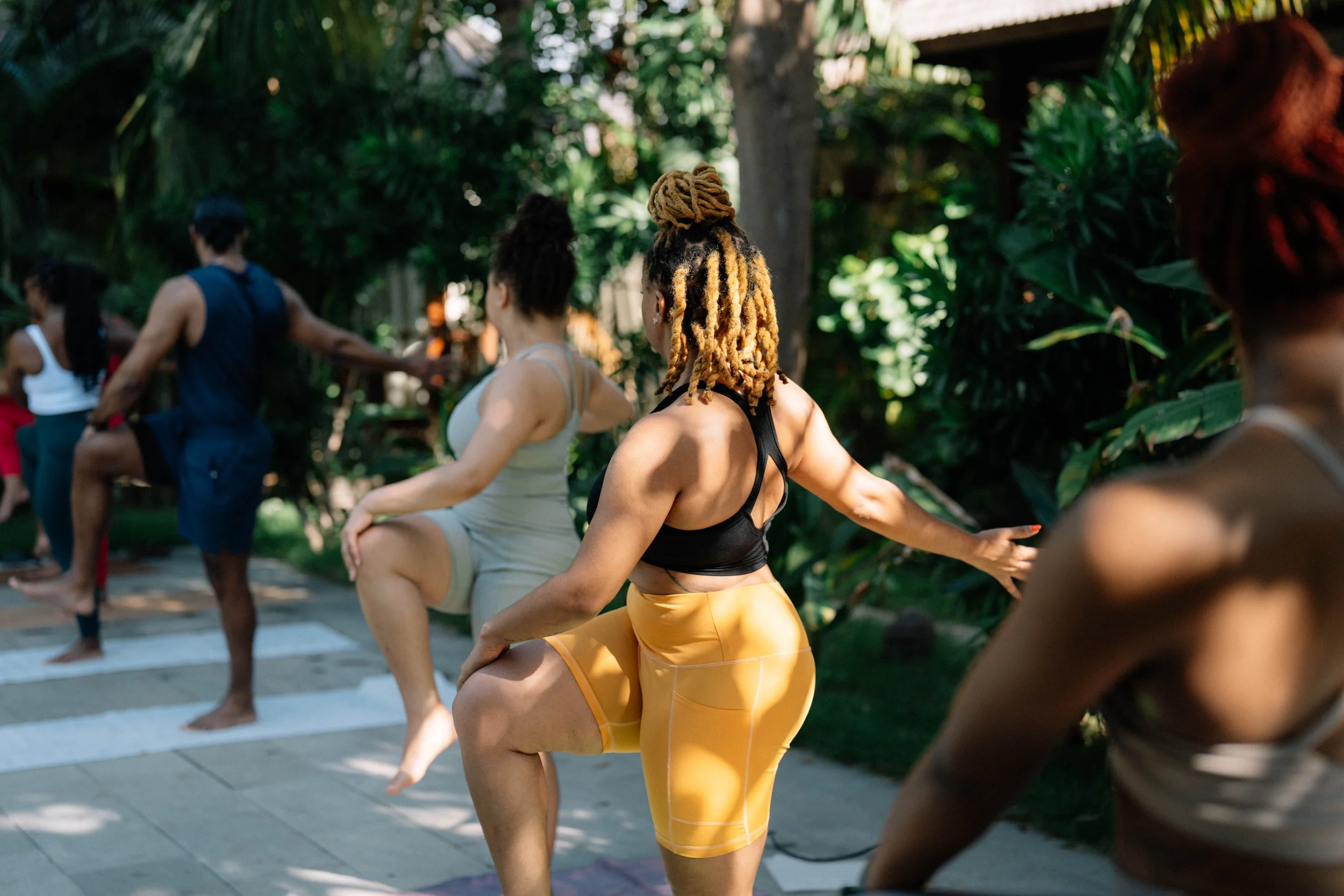
Yoga and breathwork practice at Nurasol retreat
The somatic map

Where does your shadow live?

Every shadow has a somatic signature. A place in the body where it tends to concentrate when it goes unmet, and where it begins to open when the work begins. Hover over a zone on the body or select a shadow in the legend below to explore where it lives.

Head and mind Face Throat Shoulders Shoulders Heart and chest Upper back Stomach and gut Hips and pelvis Hands Legs and feet Skin
Grief
Shame
Anger
Guilt
Fear
Abandonment
Betrayal
Rejection
Power
Meaning

Hover a zone on the body or select a shadow in the legend to explore where it lives and how it speaks.

Select a zone to begin
Heart and Chest
The seat of grief, loneliness, and love
The chest is the home of the heart chakra, Anahata. When love has nowhere to go, when belonging feels out of reach, when something tender has been hurt and closed in response, the chest holds it. Grief contracts the heart. Loneliness makes it ache. Betrayal makes it guard. And yet this is also where opening becomes possible.
Shadows that live here
You might feel here
Heaviness, aching, tightness, a hollowness that does not lift. The sense of something pressing in or something longing to open.
Throat
The seat of anger, truth, and the silenced voice
The throat chakra, Vishuddha, governs expression and truth. When anger was not welcome, the voice learned to go quiet. When shame said you were too much, the throat stopped the words before they could confirm it. When guilt decided you did not have the right to speak, the throat held your truth in silence. This zone holds decades of unsaid things.
Shadows that live here
You might feel here
Tightness, constriction, a lump that forms when something needs to be said. The voice that goes small at exactly the wrong moment.
Stomach and Gut
The seat of guilt, intuition, and knowing
The enteric nervous system in the gut responds to emotional signals faster than the brain. Guilt settles here as a knot that will not release. Anger arrives here as warning before the mind registers the threat. Fear hollows it out. The gut is the body's first language, and it has been speaking the whole time.
Shadows that live here
You might feel here
Knots, nausea, churning, a hollow dropping sensation, or the precise tightening that arrives before you have consciously named what is wrong.
Face and Head
The seat of shame and visibility
Shame is one of the only emotions that shows up visibly on the face. The flushing, the heat, the downward gaze, the wish to disappear while still occupying space. The face is where the internal becomes external, where the private becomes witnessed. Shame learned to manage the face very carefully to prevent that exposure.
Shadows that live here
You might feel here
Heat, flushing, the urge to look away or cover the face. The wish to become physically smaller in the moment of being seen.
Shoulders and Upper Back
The seat of burden, power, and what is carried alone
Shoulders carry the metaphorical and literal weight of responsibility. The anger that was swallowed across years of saying yes when meaning no. The power that was never allowed to stand fully upright. The burdens taken on because no one else would. Shoulders rarely fully drop in people carrying these shadows.
Shadows that live here
You might feel here
Chronic tightness, aching, hunching, a weight that never quite lifts even after sleep. The sensation of carrying something that was never put down.
Hips and Pelvis
The seat of abandonment, shame, and what was not allowed
The sacral chakra, Svadhisthana, governs desire, pleasure, and belonging. When shame said your needs were too much, when abandonment taught you that depending on others leads to being left, the hips learned to hold. This is one of the deepest stores of long-held emotional memory in the body.
Shadows that live here
You might feel here
Tightness, a held or locked quality, difficulty fully releasing. Sometimes numbness, as though the area has learned to go quiet to avoid feeling what is stored there.
Upper and Lower Back
The seat of betrayal and over-responsibility
The back is what we cannot see. It is where the unexpected arrives. Betrayal creates a chronic bracing between the shoulder blades, the body trying to protect itself from being surprised from behind again. The lower back carries over-responsibility, the weight of burdens that belong to others and were taken on anyway.
Shadows that live here
You might feel here
Tension between the shoulder blades, lower back pain with no structural cause, a bracing quality that does not fully release even in rest.
Hands
The seat of anger and the impulse to act
The hands carry the body's protective instinct. When anger has nowhere to go, the hands often register it first as clenching, trembling, or an urgent restlessness. The frustration of an impulse that was repeatedly overridden lives here, along with the suppressed urge to do something that was never allowed.
Shadows that live here
You might feel here
Clenching, trembling, restlessness, an energy that has nowhere to discharge. The fists that form without the conscious decision to make them.
Legs and Feet
The seat of fear and groundedness
Fear activates the flight response through the legs, the impulse to run, or the freeze that roots the feet to the ground when running is not possible. Legs that shake, legs that feel disconnected from the earth, legs that carry a restlessness that cannot find direction.
Shadows that live here
You might feel here
Trembling, restlessness, an urge to flee or feet that feel frozen. Difficulty feeling grounded or present in the body below the waist.
Skin
The seat of rejection and the hunger for contact
Skin is the boundary between self and other. It is also the organ of touch and contact. Rejection wounds the skin's sense of safety in the world. Loneliness creates what researchers call skin hunger, a genuine physiological need for contact that goes unmet.
Shadows that live here
You might feel here
Hypersensitivity, a hunger for physical contact, flushing and heat when feeling exposed. Or a numbness, as the skin learns to stop expecting touch.
Head and Mind
The seat of meaning, despair, and the questioning mind
The crown chakra and the mind are where meaning is made and where it can collapse. Meaninglessness arrives as a fogginess, a circling without resolution. Despair narrows the imagination, making it impossible to picture a future that feels different.
Shadows that live here
You might feel here
Fogginess, circular thinking, a narrowing of imagination, difficulty locating what you actually think or feel.
The practices

How Nurasol works with the body

Each shadow path in Nurasol includes a dedicated somatic stage — Stage IV: Move It. This stage brings together yoga, breathwork, and body-centered practice, all designed specifically for the shadow being worked with. These are not generic wellness practices. They are precision tools matched to the specific somatic signature of each shadow.

I
Practice 1
Shadow-specific yoga sequences
+

Each shadow path includes a yoga sequence designed around the body zones where that shadow lives. Grief works with heart-opening postures. Anger works with solar plexus activation and grounding. Fear works with root chakra practices and stabilizing poses. Shame works with the sacral and throat chakras, gently opening what has learned to close.

These sequences are led by Sanaa on video and available on demand inside Nurasol. You do not need yoga experience to practice them. You need permission to let your body lead.

II
Practice 2
Shadow-specific breathwork
+

Breath is the most direct portal to the nervous system available without any equipment. Different breath patterns create different physiological states. Kapalabhati activates and mobilizes energy for anger and power. YAM mantra breath opens the heart for grief. Nadi Shodhana balances and regulates for fear and anxiety. Box breathing grounds the system in control and overwhelm.

Each shadow path in Nurasol includes breathwork practices specifically selected for what that shadow needs to move.

III
Practice 3
Somatic exercises and body-centered inquiry
+

Beyond formal yoga, each path includes simpler somatic practices that can be done at any time. Body scans to locate where emotion lives. Self-holding practices for abandonment and loneliness. Shaking and discharge practices for stored anger. Slow, intentional movement for numbness and despair. Writing from the body rather than about the body.

These practices are designed to be accessible, not performative. You do not need a mat, a studio, or a particular level of fitness. You need a willingness to turn toward what the body is already trying to say.

The energetic system

The chakras and the shadows they hold

In yogic philosophy, the chakras are energy centers in the body that correspond to different dimensions of human experience. When shadow material goes unprocessed, it tends to concentrate in the chakra associated with the theme of that shadow. Nurasol works with the chakra system as a map for locating and moving shadow energy.

Root Chakra
Muladhara
Fear, abandonment, survival. The foundation of safety and belonging in the body.
Sacral Chakra
Svadhisthana
Shame, rejection, jealousy. Desire, pleasure, and the right to feel and want.
Solar Plexus
Manipura
Anger, guilt, control, power. Personal authority and the fire of self-direction.
Heart Chakra
Anahata
Grief, loneliness, betrayal. Love, connection, and the capacity to open.
Throat Chakra
Vishuddha
Shame, anger, fear. Truth, expression, and the voice that has learned to go quiet.
Third Eye
Ajna
Meaninglessness, numbness. Clarity, intuition, and the capacity to see clearly.
The Nurasol method

How the somatic work fits into the five stages

Every shadow path in Nurasol follows the same five-stage arc. The somatic work is not a separate module. It runs through all five stages, deepening as the path unfolds.

I
Name It
Begin to turn toward the shadow with awareness. Learn its name, its logic, and its function. The body is introduced here as a source of information rather than a problem to be managed.
II
Find It in the Body
Map where this shadow lives somatically. Learn its physical signature. Begin simple practices to create awareness in the body zones where the shadow has settled. The body becomes a collaborator rather than a container.
III
Meet It
Guided journal reflections and shadow work prompts. The writing practice deepens the somatic awareness from Stage II, creating a loop between body sensation and conscious understanding.
IV
Move It
The dedicated somatic stage. A full yoga sequence, breathwork practices, and body-centered exercises designed specifically for this shadow. Video-led by Sanaa. This is where insight from Stage III is given a physical pathway.
V
Integrate It
The wound becomes a gift. Integration prompts, closing practices, and a ceremony for marking the transformation. The body is invited to register the shift, not just the mind. This is where shadow work becomes embodied change.
Led by Dr. Sanaa Jaman

All somatic practices in Nurasol are designed and led by Sanaa, a 500 E-RYT yoga teacher, yoga therapist in training (IAYT), and PhD-level shadow work facilitator with over a decade of experience integrating body-based practice with depth psychological work.

This is not wellness content. It is precision work, grounded in both the yogic tradition and Jungian depth psychology, designed to meet each shadow where it actually lives.

Join Nurasol

Ready to begin the work?
Every shadow path awaits.

Access every shadow path, video practices, breathwork, and monthly live sessions with Dr. Sanaa Jaman diving deep into different shadows, answering your questions, and holding space for the work.

Join Nurasol →

Founding member pricing available now